
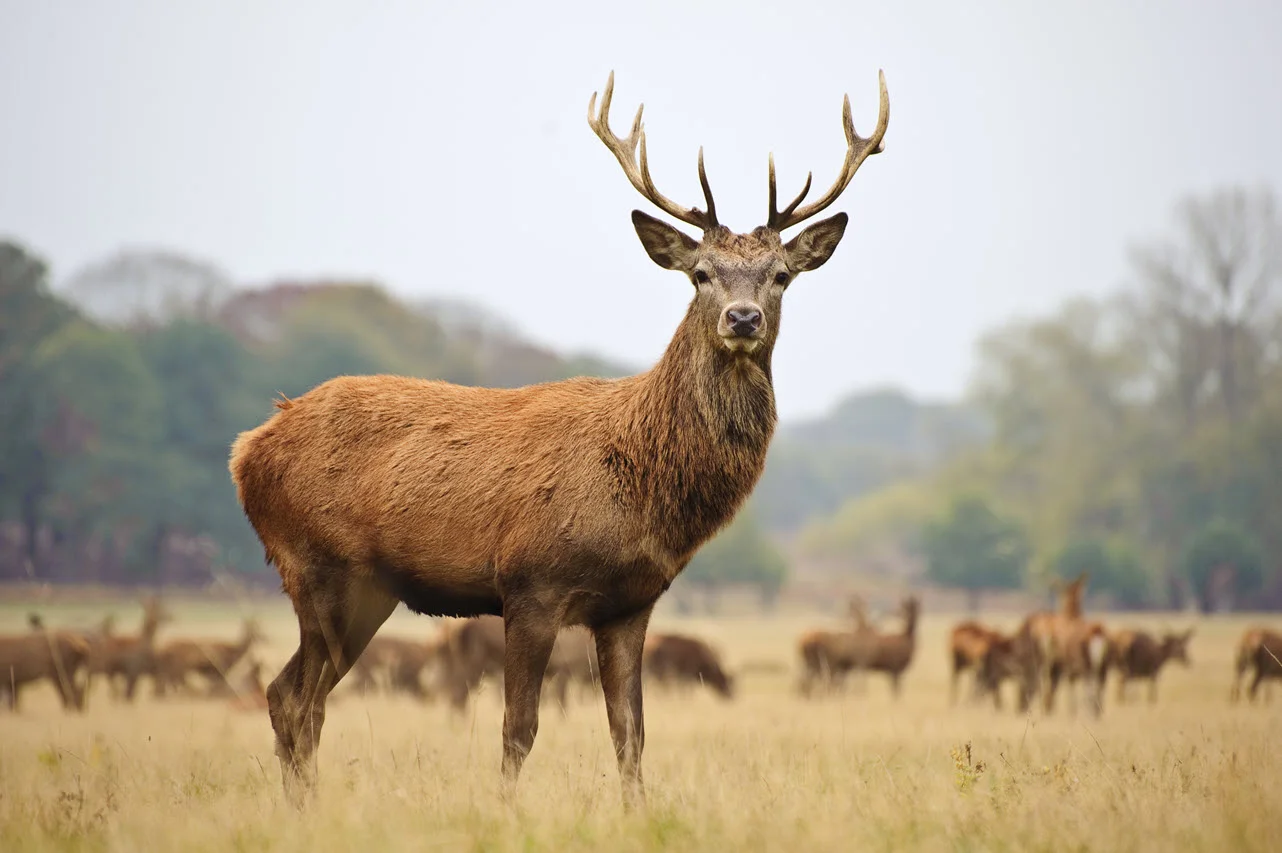
Red Deer (Cervus elaphus)
RED DEER IN THE UK
Red deer (Cervus elaphus) are one of the UK’s three native deer species and the largest wild land mammal in Britain. They are most commonly associated with the Scottish Highlands but are also found in parts of northern England, the Lake District, East Anglia, Exmoor, the New Forest and other areas. They occupy a wide range of habitats, including open hill, moorland, woodland and farmland.
GENERAL DESCRIPTION
Red deer vary significantly in size depending on habitat and nutrition. Open-hill deer are typically smaller than those found in lowland woodland environments.
Adult stags commonly weigh between 100 and 180 kg, although larger individuals can exceed 200 kg. Hinds typically weigh between 70 and 100 kg, with a broader range of approximately 63 to 120 kg across the UK. Mature stags can stand up to around 1.3–1.4 metres at the shoulder.
LIFESPAN
Red deer can live up to around 16–18 years in the wild, although many individuals will not reach this age due to environmental pressures and management.
SEXUAL MATURITY
Hinds can reach sexual maturity from around 16 months of age in productive environments, although in poorer hill conditions this may be delayed until approximately 2–3 years. Stags are sexually mature at a similar age but generally do not breed successfully until they are older and able to compete with dominant males. Most breeding is carried out by stags over five years old.
OFFSPRING
Hinds typically produce a single calf. Twin births are extremely rare in UK red deer populations. In productive environments, hinds may produce a calf annually, while in harsher conditions this may occur less frequently.
GESTATION PERIOD
The gestation period is approximately 233 days (around 7.5 to 8 months). Calves are typically born between mid-May and mid-July.
HERD SIZE AND SOCIAL STRUCTURE
Herd size varies depending on habitat and season. In woodland environments, red deer are often found in small groups or as individuals. In open hill environments, particularly in Scotland, they can form much larger groups, sometimes numbering dozens or more.
Outside the breeding season, stags and hinds generally live separately in single-sex groups. During the rut, stags move into hind groups and attempt to gather and defend females.
ANNUAL PATTERNS OF BEHAVIOUR
Spring:
Hinds give birth to calves from mid-May onwards. Calves remain hidden in vegetation for the first few weeks of life. Stags begin regrowing their antlers after casting them in March or April.
Summer:
Calves grow rapidly and begin to move with the hind. Stags remain separate from hinds and continue antler growth in velvet. Deer take advantage of improved grazing and forage availability.
Autumn (Rut):
The rut typically occurs from late September through October and into November. Stags compete for access to hinds through vocalisation, display and fighting. This is the most visible and physically demanding period for stags.
Winter:
Stags and hinds separate again. Deer may form larger groups, particularly in open landscapes. Feeding shifts towards poorer quality forage, including woody browse, and movement patterns are influenced by weather and food availability.
DAILY ACTIVITY
Red deer are most active at dawn and dusk, although in areas of disturbance they may become predominantly nocturnal. In many parts of the UK, deer make greater use of open ground at night, which can make them difficult to manage using traditional daytime stalking alone.
DIET AND DAILY CONSUMPTION (Equivalent to approx 80 rabbits)
Red deer are mixed feeders. Their diet includes grasses, sedges, rushes, heather, shrubs, leaves and agricultural crops. In winter, they may feed more heavily on woody browse and bark.
An average red deer requires approximately 4 kg of dry matter per day. This can equate to well over 7 kg of fresh forage depending on moisture content. Consumption varies depending on body size, habitat and season.
TYPES OF DAMAGE
Red deer can cause significant damage to farmland, forestry and woodland.
Common impacts include:
• Grazing pressure reducing crop and pasture yields
• Browsing of young trees and shoots, affecting woodland regeneration
• Bark stripping, particularly by larger deer, leading to disease and structural weakness in trees
• Trampling and repeated use of feeding areas
Where deer densities are too high, these impacts can result in long-term reductions in productivity and habitat quality.
SUMMARY
Red deer are an iconic native species and an important part of the UK’s natural heritage. However, where populations are not effectively managed, they can have a substantial impact on agriculture, forestry and the wider environment.
Effective, structured deer management is essential to maintaining a balance between healthy deer populations and the needs of the land.
Red Deer Management
If Red Deer are a problem on your land, please get in touch for a consultation
Stay Informed
Receive occasional updates on deer management and legislation changes
Professional Deer Management
Professional service you can trust