





Chinese Water Deer (Hydropotes inermis)
CHINESE WATER DEER IN THE UK
Chinese water deer (Hydropotes inermis) are a non-native species found mainly in eastern England, particularly in counties such as Norfolk, Suffolk, Cambridgeshire and Bedfordshire. They favour low-lying landscapes including wetlands, reed beds, grassland and arable farmland, where cover and food are readily available.
GENERAL DESCRIPTION
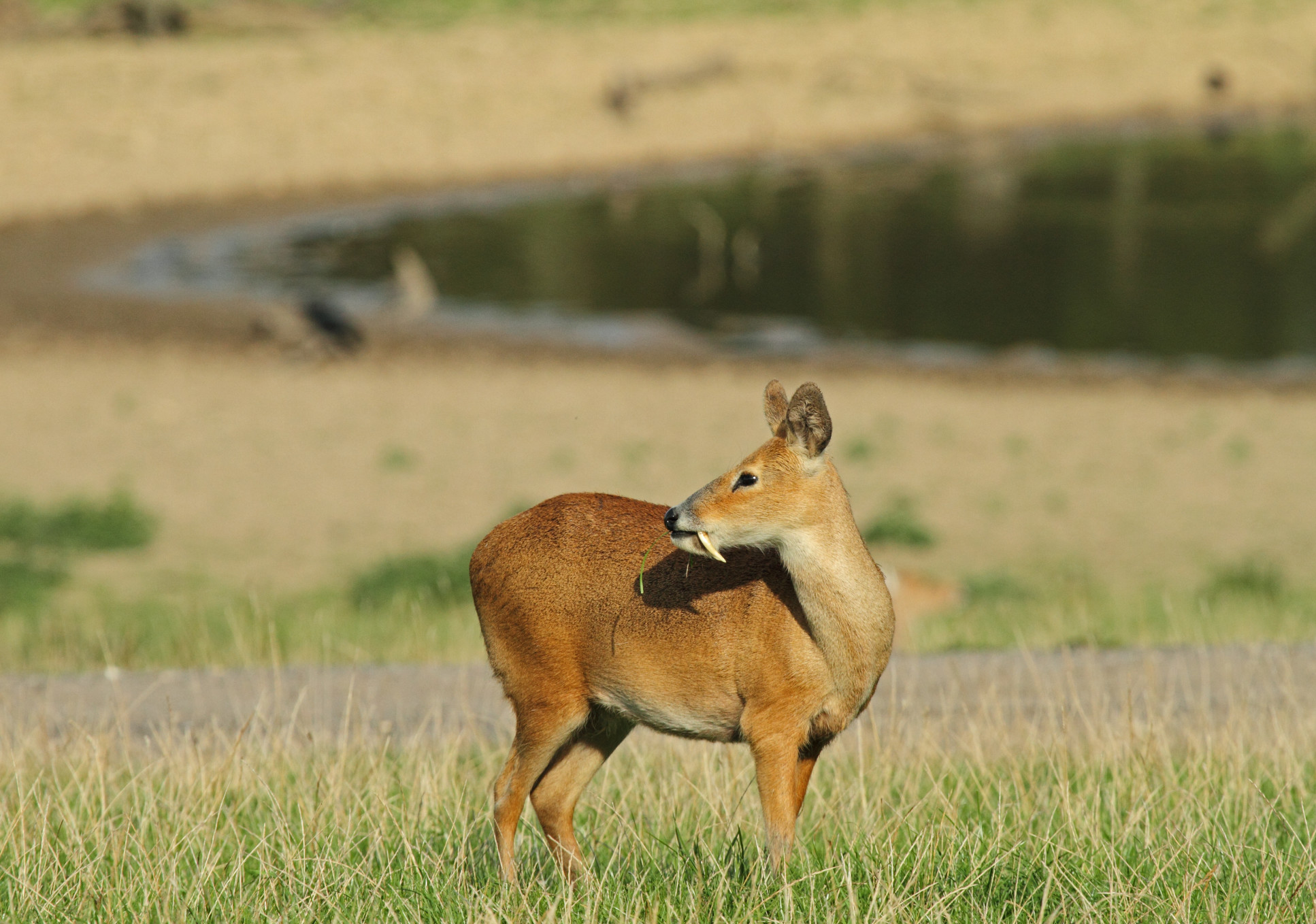
Chinese water deer are small, compact deer, typically weighing between 11 and 19 kg. They have a stocky build, short legs and a coarse, yellow-brown coat that provides effective camouflage in grassy and wetland environments. Unlike other deer species, they lack antlers; instead, males possess prominent elongated upper canine tusks, which are used in territorial disputes.
LIFESPAN
They commonly live around 6 years in the wild, although this can vary depending on environmental conditions, predation pressure (where applicable) and management intensity.
SEXUAL MATURITY
Does can reach sexual maturity from around one year of age and are capable of breeding annually thereafter. Bucks reach maturity at a similar age, although breeding success is often linked to territory establishment and dominance.
OFFSPRING
Chinese water deer are highly prolific, typically producing 2 to 3 fawns per pregnancy, with larger litters not uncommon in favourable conditions. This high reproductive output is a key factor in their ability to expand populations quickly.
GESTATION PERIOD
Gestation is approximately 6 to 7 months, with births usually occurring in late spring and early summer. Fawns are often concealed in dense vegetation for the first weeks of life, reducing detection by predators and disturbance.
HERD SIZE AND SOCIAL STRUCTURE
They are generally solitary animals, with individuals maintaining defined territories. However, small groups may occasionally form, particularly where resources are concentrated or during the breeding season.
ANNUAL PATTERNS OF BEHAVIOUR
Spring:
Fawning period, with females giving birth and remaining closely associated with cover.
Summer:
Feeding and growth, with animals making full use of abundant vegetation.
Autumn/Winter (Rut):
The rut occurs later than most other UK deer species, typically in late autumn into early winter, with increased movement and interaction between individuals.
DAILY ACTIVITY
Chinese water deer are most active at dawn and dusk (crepuscular), although they may become more nocturnal in areas subject to disturbance. They tend to remain close to cover, moving out to feed before retreating quickly if pressured.
DIET AND DAILY CONSUMPTION (Equivalent to approx 16 rabbits)
They feed primarily on grasses, arable crops and a range of wetland vegetation, showing a preference for easily digestible, nutrient-rich material. An average Chinese water deer requires approximately 0.9 kg of dry matter per day, broadly equivalent to around 16 rabbits. Their grazing behaviour can place sustained pressure on productive land.
TYPES OF DAMAGE
Chinese water deer can cause localised but significant damage to farmland and sensitive habitats, particularly where populations are concentrated.
Common impacts include:
- Grazing of crops and improved grassland, reducing yield
- Damage to vegetation in wetland and conservation areas
- Concentrated feeding pressure leading to overgrazing in smaller areas
Their tendency to remain within relatively small home ranges can result in repeated impact on the same ground.
SUMMARY
Chinese water deer are a highly adaptable and prolific species, well suited to the agricultural and wetland landscapes of eastern England. Without effective management, populations can increase rapidly, leading to sustained pressure on crops, habitats and land use. Ongoing, targeted control is required to maintain populations at sustainable levels.
Chinese Water Deer Management
If CWD are a problem on your land, please get in touch for a consultation
Stay Informed
Receive occasional updates on deer management and legislation changes
Professional Deer Management
Professional service you can trust