


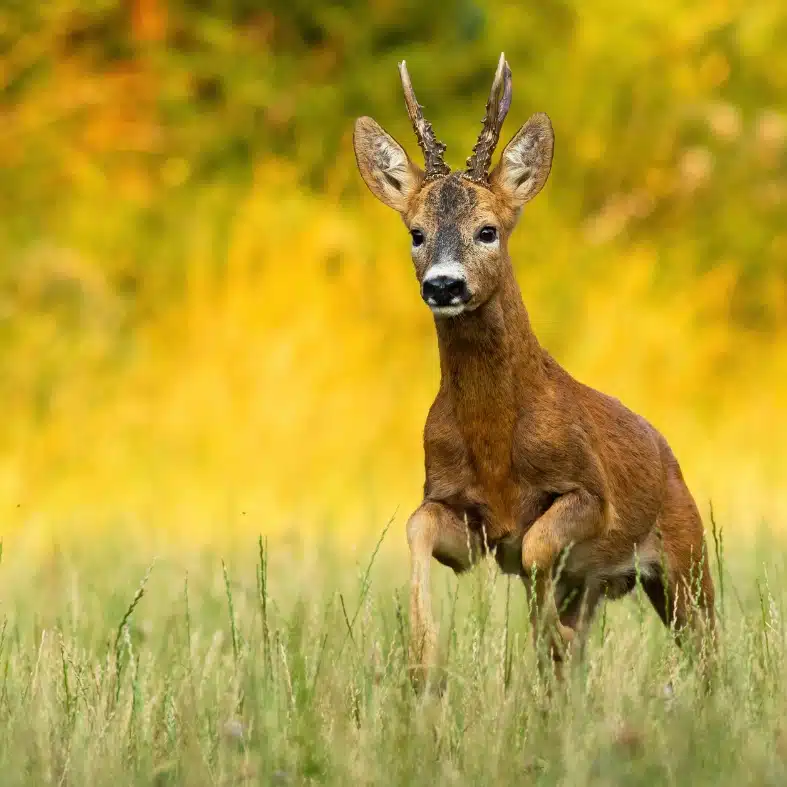
Roe Deer (Capreolus capreolus)
ROE DEER IN THE UK
Roe deer (Capreolus capreolus) are one of the UK’s two truly native deer species and are now the most widespread deer across much of Britain. They are commonly found in woodland edges, farmland, hedgerows and mixed landscapes, and have adapted well to a wide range of habitats.
GENERAL DESCRIPTION
Roe deer are relatively small and lightly built. Adult animals typically weigh between 10 and 25 kg and stand around 60 to 75 cm at the shoulder. Bucks are slightly larger than does and carry short, upright antlers.
LIFESPAN
Roe deer can live up to around 16 years in the wild, although most individuals will not reach this age due to environmental pressures and predation.
SEXUAL MATURITY
Does can reach sexual maturity from around 14 to 16 months of age, although breeding success depends on body condition and habitat quality. Bucks mature at a similar age but breeding is influenced by territory and dominance.
OFFSPRING
Does typically produce one to three kids, with twins being the most common outcome in productive environments.
GESTATION PERIOD
Roe deer have a delayed implantation. Although mating occurs in July and August, development begins later, resulting in an effective gestation period of around nine months. Fawns are typically born in May and June.
HERD SIZE AND SOCIAL STRUCTURE
Roe deer are largely solitary or live in small family groups. Bucks are strongly territorial during spring and summer. Larger groups may occasionally form during winter, particularly where food is concentrated.
ANNUAL PATTERNS OF BEHAVIOUR
Spring:
Does give birth to fawns, which remain hidden in vegetation for the first weeks of life, relying on concealment rather than flight for protection. Bucks begin establishing and marking territories, becoming increasingly intolerant of rival males.
Summer (Rut):
The rut takes place from mid-July to late August. Bucks actively defend territories, often engaging in chases and displays, and pursue receptive does. This period is characterised by increased movement and visible activity, including the well-known “roe rings” formed during courtship.
Autumn:
Territorial behaviour declines and deer become less aggressive. Activity levels stabilise, with animals focusing on feeding and recovery following the rut.
Winter:
Small, loose groups may form, particularly where food is concentrated. Feeding becomes more visible in open areas, especially during colder weather when natural forage is limited.
DAILY ACTIVITY
Roe deer are primarily crepuscular, with peak activity at dawn and dusk. However, in areas subject to regular disturbance, they may shift towards more nocturnal patterns. They make frequent use of woodland edges and cover, emerging to feed before retreating quickly if disturbed.
DIET AND DAILY CONSUMPTION (Equivalent to approx 18 rabbits)
Roe deer are highly selective feeders (concentrate selectors), preferring nutrient-rich, easily digestible material such as shoots, buds, herbs and agricultural crops. An average roe deer requires approximately 1 kg of dry matter per day, broadly equivalent to around 18 rabbits. Their selective feeding behaviour means they disproportionately target the most valuable and productive plant species.
TYPES OF DAMAGE
Roe deer can cause damage to both agriculture and woodland.
Common impacts include:
• Browsing of young trees and shoots
• Damage to crops and horticulture
• Suppression of woodland regeneration
• Localised grazing pressure
Where roe densities are high, these impacts can significantly affect productivity and habitat quality.
SUMMARY
Roe deer are a widespread and adaptable native species, well established across much of the UK. However, where populations are not effectively managed, they can exert considerable and sustained pressure on crops, forestry and sensitive habitats. Effective, ongoing management is essential to maintaining a balanced relationship between roe deer populations and productive land use.
Roe Deer Management
If Roe Deer are a problem on your land, please get in touch for a consultation
Stay Informed
Receive occasional updates on deer management and legislation changes
Professional Deer Management
Professional service you can trust