





Sika Deer (Cervus nippon)
SIKA DEER IN THE UK
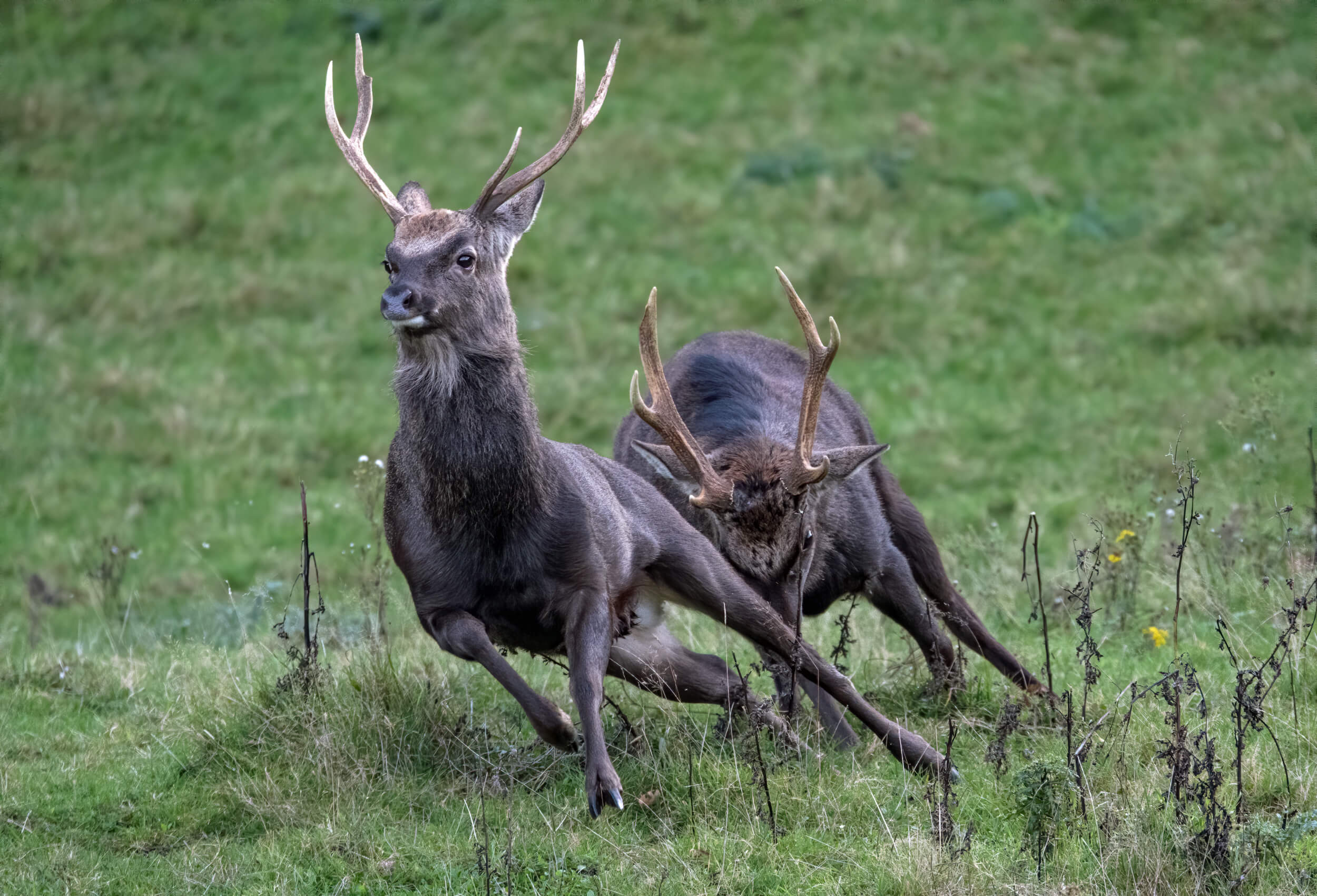
Sika deer (Cervus nippon) are a non-native species found mainly in Scotland and parts of England. They favour woodland, moorland and rough terrain and are known for their adaptability.
GENERAL DESCRIPTION
Sika deer are medium-sized. Adult stags typically weigh between 40 and 70 kg, while hinds weigh between 30 and 45 kg.
LIFESPAN
Sika deer can live up to around 16–18 years in the wild.
SEXUAL MATURITY
Hinds can reach sexual maturity from around one year of age in favourable conditions.
OFFSPRING
Hinds usually produce a single calf each year.
GESTATION PERIOD
The gestation period is approximately 7.5 months, with calves born in late spring and early summer.
HERD SIZE AND SOCIAL STRUCTURE
Sika deer often live in smaller groups compared to red deer. They tend to form single-sex groups outside the breeding season.
ANNUAL PATTERNS OF BEHAVIOUR
Spring:
Hinds give birth to calves from mid-May onwards. Calves remain hidden in vegetation for the first few weeks of life. Stags begin regrowing their antlers after casting them in March or April.
Summer:
Calves grow rapidly and begin to move with the hind. Stags remain separate from hinds and continue antler growth in velvet. Deer take advantage of improved grazing and forage availability.
Autumn (Rut):
The rut typically occurs from late September through October and into November. Stags compete for access to hinds through vocalisation, display and fighting. This is the most visible and physically demanding period for stags.
Winter:
Stags and hinds separate again. Deer may form larger groups, particularly in open landscapes. Feeding shifts towards poorer quality forage, including woody browse, and movement patterns are influenced by weather and food availability.
DAILY ACTIVITY
Sika deer are most active at dawn and dusk, although in areas of disturbance they may become predominantly nocturnal. In many parts of the UK, deer make greater use of open ground at night, which can make them difficult to manage using traditional daytime stalking alone.
DIET AND DAILY CONSUMPTION (Equivalent to approx 38 rabbits)
Sika deer are mixed feeders. Their diet includes grasses, sedges, rushes, heather, shrubs, leaves and agricultural crops. In winter, they may feed more heavily on woody browse and bark.
An average red deer requires approximately 2 kg of dry matter per day. This can equate to well over 3.5 kg of fresh forage depending on moisture content. Consumption varies depending on body size, habitat and season.
TYPES OF DAMAGE
Red deer can cause significant damage to farmland, forestry and woodland.
Common impacts include:
• Browsing of trees and vegetation
• Damage to crops
• Suppression of woodland regeneration
• Localised grazing pressure
They can be particularly difficult to manage with conventional methods due to their behaviour and habitat use.
SUMMARY
Sika deer are a highly adaptable non-native species. Without effective management, they can have a significant impact on land.
Consistent and structured control is essential to limit their effects.
Sika Deer Management
If Sika Deer are a problem on your land, please get in touch for a consultation
Stay Informed
Receive occasional updates on deer management and legislation changes
Professional Deer Management
Professional service you can trust